



Composer Andrew Lloyd Webber has been diagnosed with prostate cancer.
But this theater legend has already shown his resilience. In a statement released by publicists on Sunday,
“Andrew is now undergoing treatment and expects to be fully back at work before the end of the year.”
It is a particularly busy time for Webber, who recently announced a sequel to his highly acclaimed musical, Phantom of the Opera, entitled Love Never Dies. The production already has a scheduled premiere in London this coming March, with Broadway scheduled for November.
From all of us at The Sound Post, here’s to a quick recovery for a great icon in musical history.
Andrew Lloyd Webber Diagnosed with Prostate Cancer
Exclusive Interview: August Kleinzahler on Music I-LXXIV
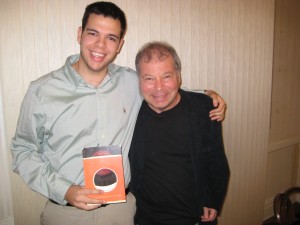
Here it is! My exclusive interview with August Kleinzahler. If you aren’t familiar with this man, you soon will be.
Fighting jet lag from his recent trip to Birmingham, England, Augie sat down with The Sound Post for a midnight interview about his latest book, Music I-LXXIV. A collection of essays from his weekly column in the San Diego Reader and other publications, the New York Times praises the book, “The battered, roomy, intellectual charm of his poetry floods these music pieces; they’re offhanded and penetrating at the same time.”
In this Sound Post exclusive interview he discusses everything from the day he cut study hall and first tried his hand at poetry, to his hatred of iPods. This lighthearted interview really captures the man behind the words.
View Full Article »
New Jersey Symphony Orchestra Gets New Maestro
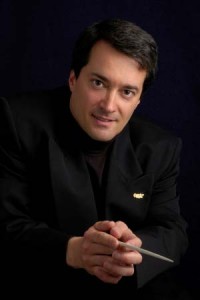
The New Jersey Symphony Orchestra announced that Jacques Lacombe will succeed Neeme Järvi as music director. The 46 year old French Canadian is joining the organization during a period of frozen wages and a reduced concert schedule with the intent of revitalizing both orchestra and audience.
Lacombe says that in order to invigorate the classical scene a conductor must be inventive with his programming. While his preferences lean towards 19th century repertoire with 20th century classics, Lacombe remains fluid with his vision, saying that he doesn’t “want to be labeled,” and that he is still “discovering things.”
While the Ledger regards Lacombe as “untested,” he has many conducting credits including the Met. Where Jäarvi brought experience and renown, Lacombe will hopefully bring new energy and perspective.
Source: The Star Ledger
Aaron Rosand Says Goodbye to His Guarneri
Here’s Lookin at You Kid
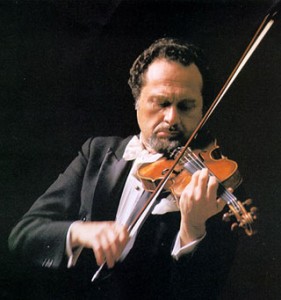
Violinist Aaron Rosand relinquished his violin in a London hotel last week after more than half a century with the instrument. Rosand sold the instrument because he “had” to; he wanted to ensure it will be played as he approaches his golden years—a contingency to which the Russian billionaire who bought the violin agreed.
Rosand says parting with the instrument “felt as if I left part of my body behind.” The Guarneri del Gesu was made in 1741, and previously belonged to violinist Paul Kochanski, earning it the nickname “ex-Kochanski.” Rosand spent his career with that violin, and says he sold it to make sure it continued to see the hands of capable violinists.
Although his performing days are waning, Rosand is staying involved with the arts—particularly his Alma Mater, The Curtis Institute of Music. Mr. Rosand has already donated $1.5 million to the conservatory after the sale, and intends to continue giving. The price tag of his instrument: $10 million.
Source: NY Times.
Newsweek: Classical Music’s Version of Dodgers vs. Yankees: A Youthquake Hits Both Coasts
California Remains Attached
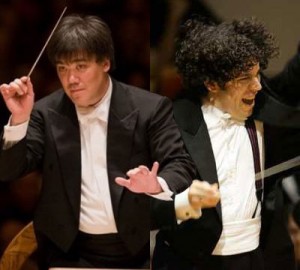
Before the Dodgers relinquished their chance at the Series, Newsweek featured an article capitalizing on the potential bi-coastal competition and profiled the two conductors who recently claimed their coasts: Alan Gilbert and Gustavo Dudamel. Author Seth Colter Walls asserts that the LA and NY Philharmonics are not in competition, but instead share the goal of bringing conductors’ names into American—even international—homes.
Citing that both conductors have already commissioned and premiered works by well known composers, Walls indicates the pair intend to, and are capable of renewing interest in new music and bringing young audiences to concert halls. Click to read the Newsweek article containing the words “buttress” and “contemporaneity.”
Gilbert, NY Philharmonic Visit Vietnam
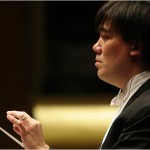
Alan Gilbert and the New York Philharmonic just took another giant step forward in its establishment as a self-proclaimed goodwill ambassador for the U.S. Presenting two concerts in Hanoi last weekend. The event marked their first visit to communist Vietnam since the war between our countries ended over three decades ago. An estimated one-third of the tickets went to sponsors and government officials, with the remainder sold to the general public. Reportedly, the cheapest tickets were around two million dong, or $115 US.
Even though ticket prices were sky high, the concerts nevertheless did sell out. But this did not wholly exclude the remaining music lovers in the area, as they could watch for free on two large screens with speakers set up outside the Hanoi Opera House. AFP spoke with laborers and cab drivers who gave up a nights work to watch the concert.
The program included Beethoven’s Piano Concerto No. 4, with Emanuel Ax as soloist, as well as Beethoven’s Symphony No. 7. A full account from AFP writer Ian Timberlake after the break.
NY Philharmonic Holds Debut Performance In Hanoi
A Music Lover’s Stimulus Package
Pay Attention Orchestra Directors

Listen up people. We’ve all heard about Obama’s stimulus package. But since that hasn’t come through yet, how about a symphony subscription stimulus? The Pasadena Symphony and POPS is currently offering a buy one, get one free deal for all new subscribers.
If you’re a frequent reader of The Sound Post, you’re familiar with my stance on the importance of not just selling tickets, but getting people in the seats. It’s no secret that orchestras rely on gifts and donations in order to stay out of the red. Tickets that have been sold but end up on scalpers’ desks the night of a performance aren’t of service to anyone. This is going to bring in those big checks the ensembles need.
View Full Article »
Breaking News: Musicians Hear Better
At Least Pretend To Be Surprised

According to studies presented at the annual meeting of the Society of Neuroscience, “musical training can improve your hearing”. Go figure. Don’t worry it gets more interesting.
Studies in the past have determined that musical training does not help a person’s ability to pick out voices in a noisy room. This year, a similar study was conducted: but instead of picking out human voices, the subjects had to pick out their respective instruments. This time around the results were quite different.
Right now you’re thinking, thanks captain obvious. This is probably not surprising news. But it was interesting to some of the country’s top neuroscientists because of it’s implications into how we treat language disabilities in children. Pitch, timing, and tone quality: the three most important aspects of language recognition. Our ability to quickly detect these attributes determine our lingual cognition.
Nina Kraus, director of the Auditory Neuroscience Laboratory at Northwestern University, explains that musicians are excelling where children with language disabilities are falling short. While nothing has been done yet using this theory, it opens up a gateway for experimental treatments of dyslexia and other impairments.
An excellent article from NPR below, please check it out. Credit to author Jon Hamilton.
Say What?! Musicians Hear Better