


How do you get to Carnegie? Practice. How do you make the most money? Get off the stage.
An article on Bloomberg.com provides some astonishing information regarding employee salaries at the renowned venue. During the fiscal year ending in June 2008, the average income of the full-time stage crew (carpenters and electricians) was $430,543. Exempt from that statistic is Dennis O’Connell, who supervises props at the hall, and made $530,044.
While not mentioned in the article, I think it’s safe to say that no Carnegie Hall musician comes even close to matching that. The only employee of the hall which surpasses the stagehands is Artistic and Executive Director Clive Gillinson, who pulled in $946,581.
So where does this discrepancy come from? The union. Joshua Free, a labor historian from Queens College, suggests that the ability of the workers union to essentially shut down the nucleus of New York’s entertainment district give them the upper hand in contract negotiations.
For more information, check out the full article on Bloomerg.com.
Stagehand Moving Props Makes $530,044 at N.Y.C.’s Carnegie Hall
It Pays To Be Offstage
Daily Dose Of Irony
A Night At The Met: Verdict – They Still Got It
And Renée Flemming is still beautiful
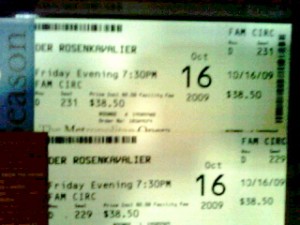
Most news coming from the Metropolitan Opera these days has not been uplifting. From the boos toward director Luc Bondy after Tosca, to the similar signs of vexation shown to maestro Daniele Gatti after Aida, this native New Yorker is a tad worried that we are developing a penchant for being hard impossible to please. Could this reputation possibly prevent performers from coming to New York? Probably not, since New York is “where dreams are made,” after all. However, I’m afraid we may yet become known as a city full of critics—not the art lovers and appreciators we are. Because I had not yet visited my favorite opera house this season, I splurged and purchased tickets for myself and a musician-colleague to Friday night’s performance of Der Rosenkavalier featuring Renée Fleming.
Perhaps it was the mediocre review given by the New York Times on Tuesday’s opening night, the flowing negativity for the other two productions currently at the venue, or the absence of James Levine, but let’s just say that I was hesitant to purchase last-minute-tickets for the sold out show (thanks to allshows.com for the tickets, but damn you for the 200% inflation without even delivering them to will-call). Upon arriving and immediately ordering champagne with the last of my cash, I took my seat.
View Full Article »
Pittsburgh In Red, Despite Strong Ticket Sales
More hapless news, this time coming from the Pittsburgh Symphony Orchestra. In a press conference on Wednesday, Richard Simmons, chairman of the orchestra, revealed that even strong ticket sales cannot come close to balancing out the effects of the national economic crisis.
The PSO announced that ticket sales were up by roughly $40,000. Good news considering most orchestras are declaring the contrary. Unfortunately, the budget deficit is totaling nearly half a million. Fault can be attributed to a decreasing endowment, as well as the dismissal of a special tax deduction which the PSO had been cashing in on (for corporations giving to nonprofit organizations).
To help the deficit, 11 administrative jobs have been cut. Not exactly what we like to hear these days. Patrons have been more than helpful, as gifts to the orchestra total $279,000.
Hopefully this season will bring in some luck to one of the country’s top organizations. Original article from the Pittsburgh Post-Gazette below.
Economy took toll on symphony’s artistically bright year
The New Yorker: Why So Serious?
Let’s Put a Smile on that Face
While concertgoers today might resent those who unknowingly applaud or whisper between movements of a piece, it seems such gaffes have only recently begun to draw frowns. The familiar silent audience who applauds in appropriate places is of relatively new invention. Relative, of course, to the age of music in the classical repertoire. As it turns out, classical concerts used to be noisy, social gatherings where aristocrats could mingle and the public could turn bourgeois into a verb.
The September 8th issue of The New Yorker featured the article “Why So Serious?” In it, writer Alex Ross chronicles the history of classical concert tradition.
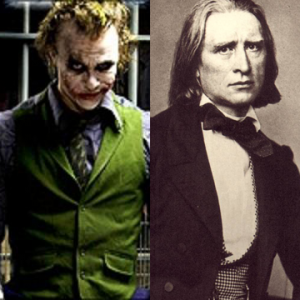
Ross cites examples from performances at the Paris Opera and recitals by the pianist credited with creating modern piano performance tradition, Franz Liszt. Ross compares Liszt’s recitals to “The Ed Sullivan Show,” claiming that Liszt would solicit suggestions from the audience for subjects to improvise at the piano. Furthermore, Liszt is said to have modulated not only between tonal centers, but entire pieces. As Ross explains it:
View Full Article »
Conservative NR Writer Dislikes Change
Grass is still green and the sky is blue

A recent article published by Jay Nordlinger of the National Review describes his personal account of several days at the Salzburg Summer Festival. Each year, the festival plays host to some of the most highly regarded musicians in the world. The Vienna Philharmonic is perhaps the star attraction for patrons, as they are both the symphony in residence, as well as the opera orchestra for the event. These weeks present the absolute crème de la crème of the music world, and to say the least, ticket prices are exorbitant.
But it was not his glowing review of the Vienna Phil’s performance of Bruckner No. 6, nor his brief history lesson on the life and works of Luigi Nono, that kept me thinking long past the final sentence. It was his canning of a voice recital, given by Patricia Petibon in the House for Mozart, which has this kid writing into the early hours of the morning.
View Full Article »
Guest Article: Just Press “Enter”: Technology and the Percussionist
Written by Daniel Cathey
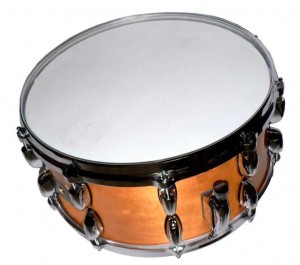
I walk into my office to a large stack of music on my desk, and my stomach turns over as I anticipate a collection of outlandish instrument requests by the composer. I can’t help but chuckle as I read down the list: propeller engine, guillotine sound, the bay of a Central American burro (alright, I made the last one up). Composers’ demands are getting stranger and stranger.
It comes with the job. Finding these instruments—or at the very least, a way to imitate the required sound—should be a challenge. These days, with all the wonderful technology available, it can be as simple as finding the correct sound effect or synthesized instrument on the Internet and playing it through a computer hooked up to an amp (this strategy proves useful when playing Harry Partch’s music). It’s a quick fix, but does it too often take some of the artistry out of what we do?
View Full Article »
El Sistema USA is GO!

Along with the fame, wealth, and respect that came with winning the TED Prize (Technology, Entertainment, Design), Jose Antonio Abreu was granted a wish.
I wish you would help create and document a special training program for at least 50 gifted young musicians, passionate for their art and for social justice, and dedicated to developing El Sistema in the US and in other countries. -Abreu
View Full Article »
El Sistema Founder To Receive Glenn Gould Prize, Dudamel To Receive Mention

The Glenn Gould Prize, given every three years in honor of (you guessed it) Canadian pianist Glenn Gould, will be given to El Sistema founder Jose Antonio Abreu. The award, to be given on October 27, 2009 (award date is 2008) is for an individual who has displayed altruistic dedication to the spread of music. Previous Laureates include Yehudi Menuhin, Yo-Yo Ma, Pierre Boulez, and Andre Previn.
View Full Article »