


Again, we would like to thank Steven Stucky and Jeffery Meyer for speaking with us this past week. And thank you to OUR VIEWERS! Thank you so much for spreading the word about The Sound Post. We love you all and will continue to bring you somewhat scholarly articles from the world of classical music everyday. We have a special interview with Sanford Reuning next week. Please send all questions or comments to Ian@soundpostnews.com, or find me on twitter at twitter.com/iansalmon. Video after the jump.
View Full Article »
VLOG #1: ICSO Wrap Up
It was late
James Levine Out For 3 Weeks
Lost In Sea of Get Well Soon Cards
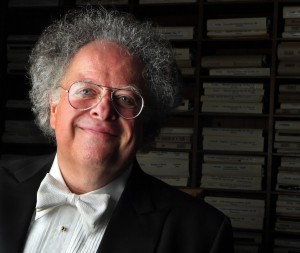
James Levine, Music Director of the Boston Symphony Orchestra and the Metropolitan Opera, was set to conduct the opening concert at Carnegie Hall this season. However, he will not be seen on a podium for the next three weeks, as Maestro Levine will soon undergo back surgery to repair a herniated disk.
Although Levine will miss some high profile performances, such as the first performance of Tosca with The Met, the operation comes at a time when Mr. Levine had already canceled performances due to extreme back pain. According to his doctors, having the surgery will prevent further damage and hopefully allow him to return to his assorted posts quickly and with renewed vigor. Source: NY Times Music.
Exclusive: Interview With Conductor Jeffery Meyer
Johannes Approves
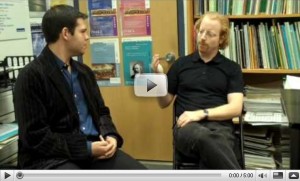
Today’s interview is with Dr. Jeffery Meyer. He is the Director of Orchestras at Ithaca College, Artistic Director of the St. Petersburg Chamber Philharmonic, and Artistic Director of the Water City Chamber Orchestra. Meyer will lead the opening performance of Ithaca College’s 09-10 season tomorrow night, Saturday October 3rd. One of the works on the program is Jeu de Timbres by Steven Stucky, who we interviewed yesterday (see his interview here).
Also scheduled is Ravel’s Ma Mère l’Oye (Mother Goose Suite), and Berlioz’s Symphony Fantastique, op. 14. The concert takes place tomorrow night, Saturday October 3rd, at 8:15pm in Ford Hall, Ithaca College.
Please click on through for the video interview and full written transcript.
View Full Article »
Exclusive: Interview With Steven Stucky
The Sound Post Welcomes Ian Salmon
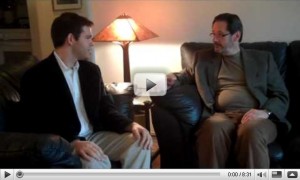
Our very own Ian Salmon conducted an exclusive interview with composer Steven Stucky regarding the performance of his work, Jeu de Timbres. The piece will be performed by the Ithaca College Symphony Orchestra this Saturday, October 3rd, 2009 in Ford Hall at Ithaca College under the direction of Dr. Jeff Meyer. Click to the full article for the video and transcript of the interview.
This is the premier of our video blog series, and will be followed by another interview tomorrow, October 2nd, 2009, with Ithaca College Director of Orchestras Jeff Meyer. So stay tuned, and keep an eye on our new videos page.
View Full Article »
Alicia De Larrocha Passes Away at 86
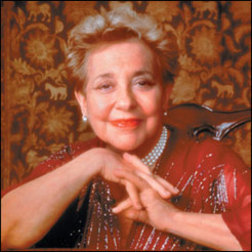
Alicia De Larrocha passed away on Friday, leaving behind her two children and an enduring legacy as one of the greatest pianists of her time. Known for her expressive playing and mastery of Spanish music, De Larrocha enjoyed a lengthy career, retiring in 2003 at age 80. There is a charming obituary at the BBC here.
Gilbert Leads NY Phil as Music Director
Mother probably proud
Alan Gilbert reigned over the New York Philharmonic tonight for the first time as music director. Hosted by actor Alec Baldwin, the televised broadcast “Live from Lincoln Center” allowed millions to watch not only the NY Phil’s opening night, but its venture into a new era of leadership. Gilbert is not only the youngest-appointed music director, but also the first native New Yorker to hold the position.
The program began with the world premier of EXPO by Magnus Lindberg, the Phil’s composer-in-residence until 2011. Lindberg wrote the work knowing it would open the milestone season—the Phil’s 50th at Avery Fisher Hall.
EXPO was followed by Songs pour Mi—a song cycle by Olivier Messiaen. Sung by Renée Fleming, the song cycle is a portrait of Messiaen’s love for his wife, Claire Delbos, who he nicknamed Mi. Those watching the televised broadcast saw Fleming introduce the cycle with a pre-recorded speech, which outlined Messiaen’s relationship from his marriage to Delbos at 27 years old, to her institutionalization due to mental illness after the end of World War II.
Finally, the headlining work of the night was Symphony No. 1—or the Fantastic Symphony—by Hector Berlioz. Written only three years after Beethoven’s death, the work facilitated the exodus into Romanticism, as it’s massive orchestration and lush expression brought unrestricted emotive composition into the musical world. The work is programmatic—that is, it possesses a narrative—with notes written by Berlioz himself. Each of the five movements has a descriptive title, including the famous March to the Scaffold and Dream of a Witch’s Sabbath. As described by Berlioz, the piece tells the story of “an artist gifted with a lively imagination” who has “poisoned himself with opium” in the “depths of despair” out of “hopeless love.”
Alan Gilbert Opens NY Phil on Wednesday
New York Times is Skeptical
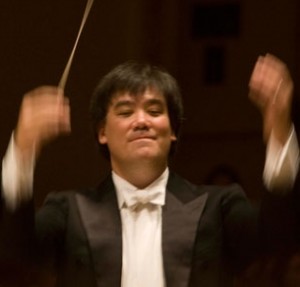
On Wednesday night, conductor Alan Gilbert will put on his music director’s shoes as he takes the podium in Avery Fisher Hall—a step up which marks a new era in the New York Philharmonic. The maestro will lead a performance of Mahler’s third symphony EXPO by Magnus Lindberg, Songs Pour Mi by Oliver Messiaen, and Berlioz’s Symphony Fantastique. While great expectations lie on Mr. Gilbert’s baton, one hopes the orchestra will take the opportunity to embrace its new leader, a fresh outlook, and renewed vigor.
Here is a great interview with Gilbert by Martin Steinberg (AP).
World’s Longest Piece of Music Performed in London
No One Alive Today Will Hear it End

A 1,000 minute arrangement of The Longplayer, a 1,000-year-long piece of music by Jem Finer, is being performed live at The Roundhouse in London. Until now, the piece had only been generated and performed by computers at The Lighthouse in Trinity Buoy Wharf in London. The piece began December 31st 1999 and will be completed at the end of the year 2999.
This performance takes place in a 20 meter circle where musicians play 1,000 year old Tibetan Singing Bowls arranged in six concentric rings. In 2002, Finer created an arrangement of the piece—he wrote a score for the musicians and dictated the proper arrangement of the instruments. And in case you were wondering, 1,000 minutes is 16.667 hours. That is 1.90132588 x 10⁻⁶ the length of the complete work.
See the BBC article (and video) here.